
Stop Yelling, Start Pausing: Why Vocal Variance is Your Ultimate Stage Weapon

By Eddie Cortés|Jun 10, 2026|The Art of Speaking
Cover story image

You’ve been there. Sitting in the back row of an empty ballroom, nursing a lukewarm coffee, watching the opening keynote speaker absolutely assault the microphone. For 45 minutes, it’s a relentless, high-volume sprint. No breaks. No breathing room. Just a wall of sound.

When they walk off stage, they are drenched in sweat and convinced they just crushed it. But look at the audience—they aren't inspired; they’re exhausted.

There is a massive misconception in the speaking industry that "high energy" means "high volume." But if you want to command a room, you don't need to yell. You need to master your instrument. And right now, no one is teaching that concept better than communication master Vinh Giang.

The Most Important Note is Silence

If you’ve spent any time studying stagecraft recently, you’ve likely come across Vinh Giang’s philosophy on the five vocal foundations: rate, volume, pitch, tonality, and the most terrifying one of all—the pause.

Giang compares the speaker's voice to an orchestra. Think about the climax of a symphony. The strings swell, the horns blast, the crescendo builds to a massive peak... and then, suddenly, there is total silence. That dead air is the most powerful note in the entire piece. It leaves the audience in awe.

Section illustration

As speakers, we are terrified of dead air. We think a pause means we’ve lost the room, forgotten our script, or let the energy drop. So, we develop a nervous tic: we fill the space. We use filler words, we ramble, or we just speak faster. But when everything is loud and fast, nothing stands out. It all becomes noise.

Why Your Audience Needs You to Stop Talking

The pause isn't for you; it is for them.

When you drop a heavy piece of content, a controversial thought, or the punchline to your core story, the audience’s brain needs a second to catch up. If you deliver a life-changing insight and immediately launch into your next sentence, you've trampled your own point.

Section illustration

Pausing gives the audience time to process. It allows them to apply your concept to their own lives. Simultaneously, it gives you—the speaker—time to breathe, relax your shoulders, and recalibrate your pace before you start rushing.

The Blueprint: How to Engineer the Pause

Stop winging your vocal delivery. Here is how to strategically build pauses into your next keynote:

  1. The Processing Pause
    Audit your script and find the three most important sentences in your keynote. The ones you want them tweeting or writing down. Practice delivering that sentence, dropping your volume slightly, and then counting to three in your head before speaking again. Let it hang in the air.

  2. The Authority Drop
    When speakers get excited, their pitch naturally goes up, and they end their sentences sounding like they are asking a question. This kills your authority. When you reach the end of a critical thought, consciously drop your pitch on the final word, close your mouth, and hold the eye contact. High volume with a flat tone sounds angry. A grounded pitch with a deliberate pause sounds authoritative.

  3. The Transition Breath
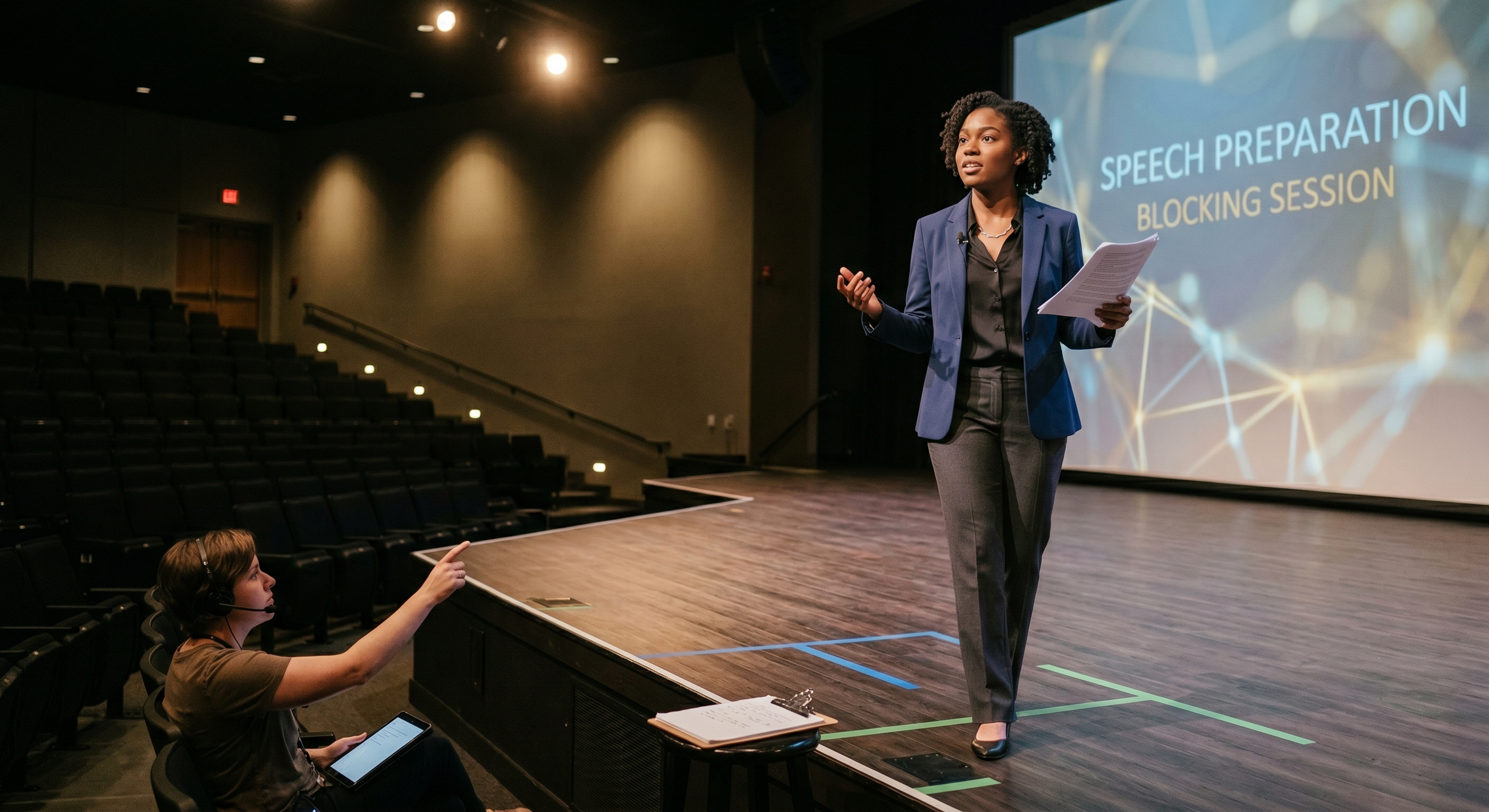
    Stop pacing the stage while you bridge from one story to the next. Use the pause as a physical reset. Finish your thought, take a full, silent breath, walk to your next mark on the stage, plant your feet, and then begin the next section.

The Final Note

The next time you step onto a stage, challenge yourself to get comfortable with the silence. It is going to feel like an absolute eternity in your head, but to the audience, it will look like total control.

Stop trying to overwhelm a room with sheer volume and speed. Give them the space to breathe, to process, and to actually hear what you have to say. Because when you stop talking, that is when the audience finally starts listening.

The Power of a 'Pause'Watch Clip →

This short clip directly from Vinh Giang perfectly illustrates how silence acts as the most important note in your vocal delivery, giving your audience the necessary time to process your message.

Gig Central LogoGig Central

The All-In-One Platform for Your Speaking Business

Commanding the stage requires vocal mastery, pacing, and presence. You can't perform with quiet confidence when your mind is racing over pending contracts or late client payments. Let Gig Central automate your operational workflows, so you can quiet the noise off-stage and master the silence on-stage.

Try Free →
Sources & Further Reading
  • Vinh Giang's Stage Academy: For deeper dives into the five vocal foundations—rate, volume, pitch, tonality, and pause—explore Giang's comprehensive frameworks on vocal mastery at vinhgiang.com.
  • The Neuroscience of Influence (René Rodriguez): A recommended follow-up for speakers looking to understand how pacing and pausing directly affect the brain's ability to retain information. Explore his methodology at meetrene.com.
  • Heroic Public Speaking (Michael Port): Essential reading for transitioning from a "speaker" to a "performer," focusing on stage blocking and theatrical delivery. Discover their training programs at heroicpublicspeaking.com.

About the Author

Eddie Cortés
Eddie CortésPRO
High-Energy Speaker • Building Student Resilience

Eddie Cortés is a highly sought-after motivational youth speaker and author of "I’m Possible: A Kid’s Guide To Building Resilience". For over 20 years, Eddie has been on a mission to empower students, transforming his own story as a former at-risk youth into a powerful catalyst for change.

Platform Partner

The All-In-One Platform for Your Speaking Business

Dashboard

EC

Confirmed Revenue

$124,500

12% of Goal

Annual Goal

82%
$150k Target

Monthly Performance

Jan
Feb
Mar
Apr
May
Jun